
A lovely sunny Sunday and perfect for a drive to see a new castle. We invited my parents to come along and we had a very nice time.
First we visited the castle and had lunch at the Art museum. Soup of the day – funnel chanterelle (yes, my hubby chose something else .. lol ) was delicious.
The castle was built back in the 16th century by Gustav Vasa and was a defense fort to begin with. One of the most famous events that took place in this castle (in Rikssalen – the National Hall) was when Queen Kristina abdicated from the throne back in 1654. The Rikssalen is now available if you want to arrange a big party or cultural events but booking is limited by the statutes of the Rikssalsstiftelsen. The Hall is only rented out for events that go beyond the ordinary or have a certain ceremonial character.
We then drove downtown and went to Güntherska for a nice coffee. We were able to sit outside in a small pavilion which was lovely.
Castle of the month – Ekebyhov
New month and a new castle to visit. It is February and we visited Ekebyhov Slott which is situated on Ekerö, an island in Mälaren. In the early 1600s there was a stone castle here, but hardly anything is left from the original castle. It was replaced by this wooden castle and that started to be built in 1661 and completed 1701. It is now owned by the municipality of Ekerö and hosts a café. There is also a lot of associations that has their activities and other gatherings here with conferences and courses. We had a very nice cup of tea with home baked goodies at a very fair price.
Afterwards we drove further out on Ekerö to try to find Bjorn Ironsides Buriel Mound, but it was situated on private property so we didn’t get to see it.
We did, however, make a quick stop and walk around the Munsö Church, which was really pretty. The church is one of eight still existing circular churches in Sweden and origins back from 1185.
Castle of the month – Hesselby
Our choice of castle of this month fell on Hesselby Castle in Hässelby. They had a brunch-Sunday which sounded nice so we made reservations for us.
Gustaf Bonde began to build the manor in the 1640s. The main building is on two floors with two wings with the towered higher pavilions. The baroque garden behind the castle was built in the 18th century. The city of Stockholm bought the property in the 1930s and it was renovated in the 1960s. In 2010 it was sold to a private owner and it has been frequently available for weddings, conferences and hotel guests.
To the left of the entrance there is still a grave field from the viking era and to mark the place a runic stone was moved here in 1860.
Castle of the month – Näsby – on Advent 
The castle of the month of December is Näsby Slott in Täby. My sister and mom came along and we visited the Christmas fair they hosted outside. A well visited fair with a lot of market stalls selling all kinds of goodies. We bought some treats such as Swedish cheesecake, small sausages and smoked salmon.
The property goes back to the 14th century and is situated by Näsbyviken in Täby. The castle was built back in 1660 but burned to the ground in 1897. Rebuilt a few years later according to the original design. Parts of the old manor garden still exist and are well preserved. Today it is a conference establishment with a hotel and restaurant.
Castle of the month – Linköping
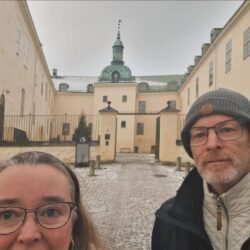
After breakfast we checked out from the hotel and headed over to see the castle of this month – Linköping – and the cathedral right next to the castle.
The castle is the oldest inhabited secular building in Sweden and was set up at the 12th century. It was originally a residence for the bishop. King Gustav Vasa took over the castle in 1527 and he lived there during his visits to Linköping.
Since 1796 the castle is the residence to the governor of Östergötland and even today it still has the governor’s state apartment for representations and also private residence.
The cathedral next door was an amazing church to see and combined they hold the Linköpings Castle- and Cathedral museum. Linköping’s Cathedral church is one of Europe’s best-preserved medieval cathedrals, its construction beginning in the early 13th century. Only the cathedral in Uppsala is larger than this church in Sweden. Well worth a visit!
Castle of the month – Nynäs
Castle of the month of October – Nynäs Slott outside of Nyköping. My hubby has a cousin who lives in Nyköping and tonight we were invited to them for dinner. So, we decided to make a stop on the way and see this castle.
The first owner was Birgitta Jonsdotter back in 1328. The estate has then been mostly inherited and passed down in generations and only sold a couple of times. Various famous families have been the owners such as Grip, Gyllenstierna, Bonde, Anckarswärd, Hildebrandt and Gripenstedt who was the last family to own the property and sold it in 1984 to Sörmlands Läns Landsting.
The Gyllenstierna- family built the main building in the 17th century. Erik Gyllenstierna was a chamberlain to King Gustav II Adolf. The Gripenstedt-family took over the estate back in the 1850s and kept it as a summer residence. In 1967 parts of it was sold to the county counsil Landstinget and in 1972 the whole estate was classified as a nature reserve area. Landstinget opened the estate to the public in 1985 for guided tours. The National Museum owns all the collections and inventories in the castle.
Castle of the month – Örby
September almost over and time for the castle of the month – this time we chose Örby Slott close to where we live.
The castle was built back in 1674 by orders from royal governor Falkenberg. Later it was owned by marshal of the realm Gyllenstierna who renovated the properties and changed the style to an empirical one. It was bought by Stockholm City in 1897 and the city split up the property in smaller parts. The Castle has been hosting the Embassy of Vietnam since the 1970s.
When the castle was built they also arranged a baroque garden in the back which is a really lovely oasis with flowers, a variation of trees, a fountain and also a larger paddling pool surrounded by statues. The garden closest to the castle isn’t open for public, but the rest is.
Castle of the month – Ulfsunda
We had made reservations for breakfast at Ulfsunda Slott this morning. Thought it would be a great way to start the weekend. And the food was great and it was a nice visit.
Ulfsunda Castle was built back in the 1640s by field marshal Lennart Torstensson. Queen Kristina was a guest there in 1647 and some of the rooms in the castle are named after her.
Like most of the castles, Ulfsunda is today a conference- and meeting facility and a hotel. The castle is situated between the lakes Lillsjön and Ulvsundasjön in Ulvsunda, Bromma, outside of Stockholm.
Castle of the month – Årsta slott
Castle of the month of July is – Årsta slott in Österhaninge. We decided to go over there for a quick coffee and take a look around. The castle is nowadays the main building at a golf course so plenty of fields around the property with people playing golf.
The castle was finished built back in 1667 but the property is from the 13th century. The Bremer family owned the castle 1805-1863 and one of their daughters, Fredrika Bremer, was an internationally known writer, reformer, and champion of women’s rights. She introduced the domestic novel into Swedish literature. Her novel “Hertha” caused a lively debate and led to a public opinion forming which made the government in 1858 pass a new law allowing unmarried women of the age of 25 or older to apply to come of age. Married women, however, were not allowed to come of age before the 1921 legislation over 50 years later.
The Årsta castle was her home until she died in 1865.
Castle of the month – Tullgarn
June and a new castle to visit – this time we chose Tullgarn Slott, near Trosa in Södermanland. It’s one of our most popular royal destinations and less than an hour away from Stockholm by car. Tullgarn Palace was the summer palace of King Gustaf V and Queen Victoria at the end of the 1800s and beginning of the 1900s. However, the palace was originally built for Duke Fredrik Adolf in the 1770s.
We had a lovely visit and took the guided tour when we arrived. It was 45 min and showed several of the rooms in the castle and the history behind. After the tour we walked around to the front which is facing the water and then we had lunch at the castle café. Waffles and a locally produced apple juice. Mmm.